Gold Calculator Blog: Value Estimations & Trends
Understanding gold bars weight
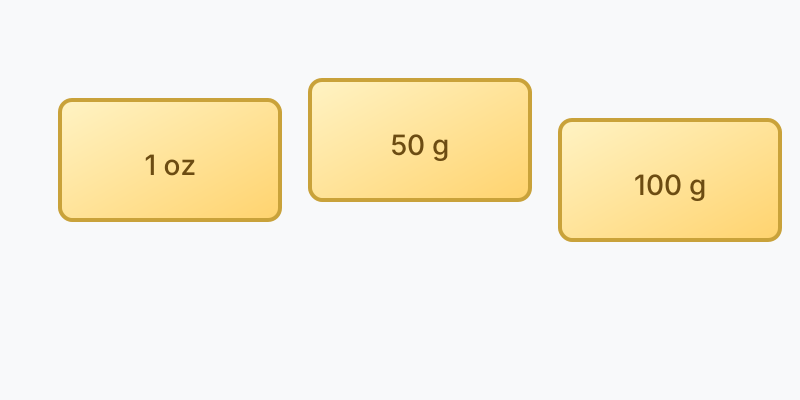
Common sizes include 1 oz, 50 g, 100 g and 1 kg. To compare value consistently across regions, convert everything to troy ounces (31.1035 g each). Bars are typically .999 or .9999 fine; jewelry pieces vary by karat.
When estimating, use live spot and multiply by fine content. For bars sold with premium, add or subtract using the calculator’s premium/discount field to reflect market conditions and dealer spreads.
Estimate with CalculatorHow much is 14K gold worth per gram?
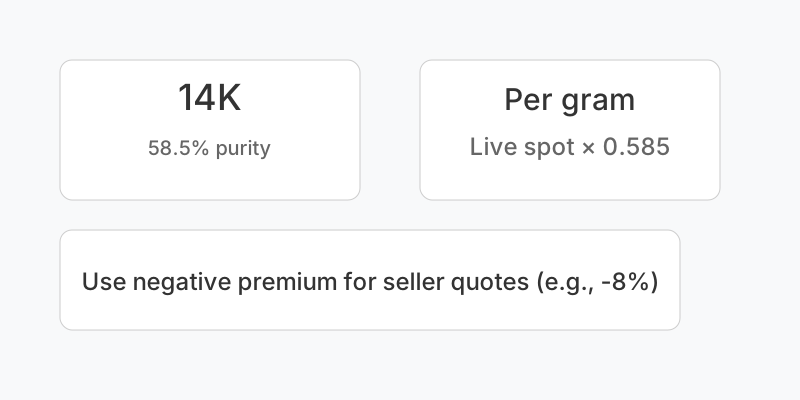
14K purity is 58.5%, meaning each gram contains 0.585 g of pure gold. Set the calculator to grams, select 14K, and the tool returns an instant per‑gram estimate using live spot prices.
For sell quotes, local buyers may deduct refining fees or apply spreads for smaller lots. Enter a negative premium (e.g., -8%) to approximate a buy price in your market and compare offers fairly.
Check Per‑Gram ValueLast ten years gold rate explained
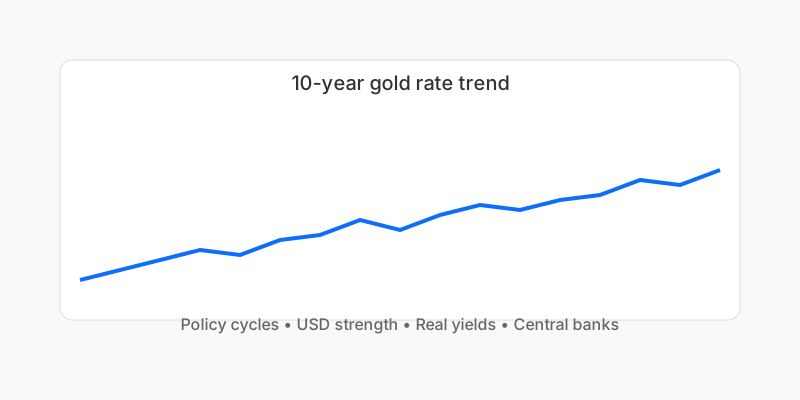
Over ten years, gold reacts to policy cycles, USD strength and real yields. The interaction between inflation expectations and central bank activity often drives multi‑year trends.
Use extended charts to inspect drawdowns and breakouts, then align purchase plans with moving averages and macro signals. For short‑term views, monitor futures daily pivot points and news flow.
Open Market Chartshow much is 12 grams of 18k gold worth
18K purity is 75%, so fine grams = 12 × 0.75 = 9 g. Convert to troy ounces: 9 ÷ 31.1035 ≈ 0.289 oz. Value ≈ 0.289 × spot (USD/oz).
Select grams and 18K to get an instant estimate. Use the premium/discount field to reflect local buy quotes or retail markups.
Estimate 12 g (18K)how much is 75 grams of gold worth
Convert grams to troy ounces: 75 ÷ 31.1035 ≈ 2.411 oz. For 24K, value ≈ 2.411 × spot. For karat gold, multiply grams by purity first.
Enter 75 g and select the karat to estimate. Adjust premium/discount to mirror real purchase or sell conditions.
Estimate 75 ghow much is 1 tola of 24k gold worth
1 tola ≈ 11.66 g. Convert to troy ounces: 11.66 ÷ 31.1035 ≈ 0.375 oz. For 24K, value ≈ 0.375 × spot (USD/oz).
For 22K tola items, apply 0.9167 purity before converting. Use premium/discount to represent local retail or buyback spreads.
Estimate 1 tola (24K)how much is 6 tolas of gold worth
6 tolas ≈ 6 × 11.66 g = 69.96 g; convert to troy ounces: 69.96 ÷ 31.1035 ≈ 2.249 oz. For 22K, apply ~0.9167 purity before converting.
Select grams and the correct karat, then estimate with live spot. Use premium/discount to reflect market pricing.
Estimate 6 tolashow much is 200 grams of gold worth
Convert grams to troy ounces: 200 ÷ 31.1035 ≈ 6.430 oz. For 24K, value ≈ 6.430 × spot. For karat gold, multiply grams by purity first.
Enter 200 g and set karat to estimate. Adjust with premium/discount to simulate retail or buy‑side spreads.
Estimate 200 ghow much is 3 ounces of gold worth
For 24K bullion, melt ≈ 3.0 × spot (USD/oz). For jewelry, convert ounces to grams (1 oz = 31.1035 g) and apply karat purity before valuing.
Switch units to ounces for a direct estimate, or grams for karat items. Add premium/discount to model market conditions.
Estimate 3 ozhow much is 12 grams of 22k gold worth
22K purity is ~91.67%, so fine grams ≈ 12 × 0.9167 = 11.00 g. Convert to troy ounces: 11.00 ÷ 31.1035 ≈ 0.354 oz. Value ≈ 0.354 × spot (USD/oz).
Select grams and 22K in the calculator for an instant estimate. Use premium/discount to reflect local retail or buy quotes.
Estimate 12 g (22K)how much is 50 grams of 24k gold worth
24K is pure gold. Convert grams to troy ounces: 50 ÷ 31.1035 ≈ 1.607 oz. Value ≈ 1.607 × spot (USD/oz).
Enter 50 g and select 24K to get a direct estimate using live spot. Add premium for retail markups if needed.
Estimate 50 g (24K)how much is quarter ounce of gold worth
A quarter‑ounce is 0.25 oz. For 24K bullion, melt ≈ 0.25 × spot. For jewelry, convert to grams and multiply by karat purity before applying spot.
Switch units to ounces in the calculator for a direct per‑ounce estimate, or use grams for karat items.
Estimate 0.25 ozhow much is 2 ounces of gold worth
For 24K bullion, melt ≈ 2.0 × spot (USD/oz). For karat items, convert to grams and multiply by purity first, then apply spot per gram.
Set units to ounces for a quick 2 oz estimate, or grams for karat jewelry. Adjust with premium/discount to model market spreads.
Estimate 2 ozhow much is 500 grams of gold worth
Convert grams to troy ounces: 500 ÷ 31.1035 ≈ 16.075 oz. For 24K, value ≈ 16.075 × spot. For karat gold, multiply grams by purity first.
Enter 500 g and the correct karat to estimate. Use premium/discount to simulate real purchase or sell conditions.
Estimate 500 ghow much is 3 tolas of gold worth
1 tola ≈ 11.66 g. 3 tolas ≈ 34.98 g; convert to troy ounces: 34.98 ÷ 31.1035 ≈ 1.124 oz. For 22K, apply ~0.9167 purity before converting.
Choose grams and karat, then estimate with live spot. Add premium for local retail pricing or subtract for buy quotes.
Estimate 3 tolashow much is 15 grams of 22k gold worth
22K purity is ~91.67%, so fine grams = 15 × 0.9167 ≈ 13.75 g. Convert to troy ounces: 13.75 ÷ 31.1035 ≈ 0.442 oz. Value ≈ 0.442 × spot (USD/oz).
Set units to grams and choose 22K. Use premium/discount to reflect retail markups or local buy quotes.
Estimate 15 g (22K)how much is 8 grams of 14k gold worth
14K purity is 58.5%, so fine grams = 8 × 0.585 = 4.68 g. Convert to troy ounces: 4.68 ÷ 31.1035 ≈ 0.150 oz. Value ≈ 0.150 × spot.
Select grams and 14K to get a quick estimate. Apply a negative premium to approximate local buyback spreads.
Estimate 8 g (14K)how much is 1 ounce of gold worth today
For 24K bullion, value ≈ 1.0 oz × spot (USD/oz). For jewelry, convert to grams and multiply by karat purity before applying spot.
Switch units to ounces in the calculator for a direct per‑ounce estimate, or use grams for karat items.
Estimate 1 ozhow much is 100 grams of gold worth
Convert to troy ounces: 100 ÷ 31.1035 ≈ 3.215 oz. For 24K, value ≈ 3.215 × spot. For karat gold, multiply grams by purity first.
Enter 100 g and select the correct karat. Use premium/discount to model real‑world buy/sell conditions.
Estimate 100 ghow much is half ounce of gold worth
0.5 oz × spot gives the melt for 24K. For karat jewelry, convert 0.5 oz to grams (≈ 15.5518 g) and multiply by purity before valuing.
Set units to ounces for a direct estimate, or grams for karat items, then adjust with premium/discount.
Estimate 0.5 ozhow much is 5 tolas of gold worth
1 tola ≈ 11.66 g. 5 tolas ≈ 58.3 g; convert to troy ounces: 58.3 ÷ 31.1035 ≈ 1.875 oz. For 22K, apply 0.9167 purity before converting.
Choose grams and karat, then estimate with live spot. Add premium to reflect local market pricing.
Estimate 5 tolashow much is 30 grams of 18k gold worth
18K purity is 75%, so fine gold grams = 30 × 0.75 = 22.5 g. Convert to troy ounces: 22.5 ÷ 31.1035 ≈ 0.723 oz. Value ≈ 0.723 × spot (USD/oz).
Select grams and 18K in the calculator for an instant estimate. Use the premium/discount field to reflect retail markups or local buy quotes.
Estimate 30 g (18K)gold price per tola today
One tola ≈ 11.66 g. For 24K, convert to troy ounces: 11.66 ÷ 31.1035 ≈ 0.375 oz, then multiply by spot. For 22K, apply purity first: grams × 0.9167.
Choose grams and the correct karat, then estimate. Adjust premium to reflect local retail or sell‑side spreads.
Estimate 1 tolahow much is 1 kilogram of gold worth
1 kg = 1,000 g. Convert to troy ounces: 1,000 ÷ 31.1035 ≈ 32.1507 oz. For 24K, value ≈ 32.1507 × spot. For karat gold, multiply grams by purity first.
Large bars carry varying premiums; simulate purchase or sell conditions using the premium/discount field.
Estimate 1 kg18k vs 22k: per‑gram price difference
Per‑gram value ≈ (spot ÷ 31.1035) × purity. 18K uses 0.75; 22K uses ~0.9167. Example: if spot is $2,400/oz, per‑gram 18K ≈ (2400 ÷ 31.1035) × 0.75; 22K ≈ × 0.9167.
Set grams and switch karat to compare instantly. Add retail markups or sell‑side discounts via the premium field.
Compare 18K vs 22Khow to include making charges in jewelry pricing
Making charges cover labor, brand and finishing. Model them as a positive premium when estimating purchase prices; for resale, use a negative premium to reflect typical buyback spreads.
Enter weight and karat, then adjust the premium/discount field to represent making charges or fees and compare quotes on a unified basis.
Model making chargeshow much does 44g of raw gold cost
For 24K, convert grams to troy ounces: 44 ÷ 31.1035 ≈ 1.415 oz. Value ≈ 1.415 × spot (USD/oz). For karat gold, apply purity first: fine grams = 44 × karat%. Example (18K): 44 × 0.75 = 33 g fine → 33 ÷ 31.1035 ≈ 1.061 oz × spot.
Set units to grams and choose the karat. Results use live spot. Use the premium/discount field to reflect retail markups or local buy quotes.
Estimate 44 ghow much is 20 pounds of gold worth
Use avoirdupois pounds: 1 lb = 453.592 g. 20 lb ≈ 9,071.84 g; convert to troy ounces: 9,071.84 ÷ 31.1035 ≈ 291.66 oz. Total value ≈ 291.66 × spot × karat% (24K = 100%).
In the calculator select grams or ounces, set karat and weight, then use premium/discount to mirror real purchase/sell conditions.
Calculate 20 lbhow much is 2.5 grams of gold worth
Select grams and enter 2.5 g. For 24K, value ≈ 2.5 × price per gram. For karat gold, multiply by purity first (e.g., 14K: 2.5 × 0.585), then apply price per gram (spot ÷ 31.1035).
Selling quotes often include discounts; enter a negative premium (e.g., −5% to −12%) to approximate local buyback spreads.
Estimate 2.5 gprice of 10k gold per gram: today
10K purity is 41.7%. Per‑gram value ≈ (spot ÷ 31.1035) × 0.417. Select grams and 10K to get today’s estimate instantly.
Small lots often see −12% to −18% discounts; use a negative premium to compare dealers on a unified basis.
Check 10K Per‑Gramprice of gold and white gold
White gold is an alloy (often with nickel/palladium). Its value depends on karat (14K: 58.5%, 18K: 75%). Rhodium plating does not change gold content; melt value depends on gold grams and purity.
Weigh the item and subtract stones, select grams and the correct karat, then estimate. Represent brand/craft markups with a positive premium; sell‑side discounts with a negative premium.
Value Gold & White Gold10k gold price gram today
Choose 10K and grams to see today’s per‑gram price based on 41.7% purity and live spot: per‑gram ≈ (spot ÷ 31.1035) × 0.417.
Enter a positive premium to simulate retail markup; use a negative premium to reflect local buyback spreads and refining fees.
Get 10K Gram Price14k gold ring how much is it worth
Weigh the ring and subtract stones. 14K contains 58.5% gold, so fine gold grams ≈ net grams × 0.585; melt value ≈ fine grams × price per gram (spot ÷ 31.1035).
Resale quotes depend on condition and fees; enter a negative premium (e.g., −8% to −15%) to model offers, then compare with unified units/karat.
Estimate 14K RingUS Google Searches – Gold
- gold price today
- gold spot price
- XAUUSD
- gold price per gram
- 24k gold price
- GLD
- buy gold near me
- krugerrand price
US Google Searches – Silver
- silver price today
- silver spot price
- XAGUSD
- silver price per ounce
- SLV
- silver coins melt value
- gold silver ratio
- comex silver
US Google Searches – Platinum
- platinum price today
- platinum spot price
- XPTUSD
- platinum price per ounce
- PPLT
- platinum vs palladium
- platinum autocatalyst
- platinum price forecast
21K gold price per gram
21K purity is 87.5%, so each gram contains 0.875 g of fine gold. Set units to grams, choose 21K, and the calculator returns an instant per‑gram estimate using live spot.
When selling, small lots may include discounts or fees. Use a negative premium to simulate local quotes and compare offers fairly across dealers.
Check 21K Per‑GramHow much is one pound of gold worth?
Most people mean an avoirdupois pound (~453.592 g). Convert grams to troy ounces (31.1035 g/oz): 453.592 ÷ 31.1035 ≈ 14.583 oz. Multiply by spot × purity to estimate value.
A “troy pound” isn’t standard for bullion; pricing is per troy ounce. Use grams or ounces in the calculator and apply premiums/discounts to reflect buy/sell conditions.
Estimate One‑Pound Value22K gold price per gram
22K purity is ~91.67%, so each gram contains about 0.9167 g of fine gold. Set units to grams, choose 22K, and get an instant per‑gram estimate using live spot.
For selling small lots, local buyers may apply spreads or fees. Enter a negative premium (e.g., −6% to −12%) to approximate quotes and compare fairly.
Check 22K Per‑Gram24K gold price per gram
24K is pure gold, so each gram equals 1.0 g of fine gold. Select grams and 24K in the calculator to see the per‑gram value directly from live spot prices.
Retail purchases often include positive premiums; wholesale or sell‑side quotes may include discounts. Use the premium field to normalize offers.
Check 24K Per‑GramFAQ
What is a gold cost calculator?
It estimates real purchase or sell costs by combining spot price, purity and weight with premiums/discounts, refining fees, treatment charges, shipping/insurance and FX conversion.
Use the premium field to simulate scenarios: positive values for buy‑side costs, negative values for sell‑side quotes.
How do I calculate 10K gold per gram?
Set units to grams, choose 10K (41.7%) and multiply grams × spot × 0.417 to get an instant estimate.
For sell quotes, add a negative premium (e.g., −12% to −18%) to approximate local buy prices.
How do I compare dealer quotes fairly?
Use the same units (grams or oz), the same karat/purity and live spot. Include premiums/discounts, refining fees and treatment charges to compare net proceeds rather than headline prices.
Run scenarios in the calculator’s premium field (e.g., +8% buy cost vs −12% sell quote) to normalize offers.
How do I convert ounces and grams?
Use 1 troy ounce = 31.1035 grams. Divide grams by 31.1035 to get troy ounces, or multiply ounces by 31.1035 to get grams.
The calculator supports both units. Select grams or ounces, enter karat, and apply premiums/discounts for real‑world quotes.
how much is 10k gold per gram
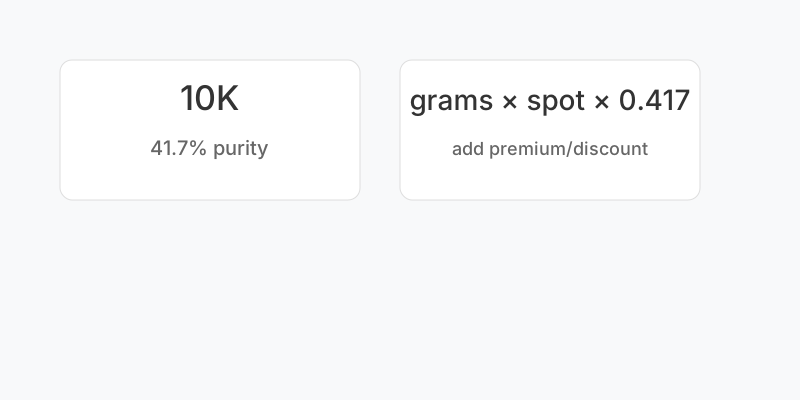
10K purity is 41.7%, meaning each gram contains 0.417 g of pure gold. Set the calculator to grams, select 10K, and you’ll get an instant per‑gram estimate using live spot prices.
For selling small lots, local buyers may deduct refining fees or apply spreads. Enter a negative premium (e.g., −12% to −18%) to approximate a buy quote and compare fairly.
Check 10K Per‑GramGold cost calculator: estimate real purchase and sell costs
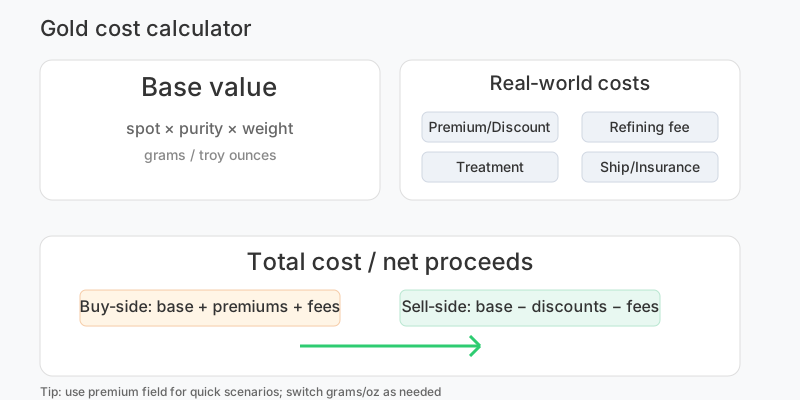
Use live spot, purity and weight to get base value, then layer in real‑world costs: dealer premiums or discounts, refining fees, treatment charges, shipping/insurance, and FX conversion when applicable.
Set units to grams or troy ounces, choose karat, and use the premium field for quick scenarios: positive premium for buy‑side costs, negative premium for sell‑side quotes. Compare dealers using the same inputs to make decisions confidently.
Use Gold Cost CalculatorSilver coin melt value basics
For 90% U.S. silver coins, a $1 face value contains roughly 0.715 troy oz of silver. Multiply by spot to estimate melt, and adjust for dealer spreads as needed.
Circulated wear and specific series can slightly change fine content. Always confirm details for halves, quarters and dimes, and compare quotes in your local currency.
Go to Coin Melt ValuesGold coin melt value vs. collectible premium
Melt value depends on purity and weight; collectible premium adds rarity, condition and demand. For modern bullion, premiums track market supply; vintage coins can differ greatly.
If you plan to sell, obtain both a melt‑based quote and a numismatic evaluation when applicable. Use live spot math first to anchor expectations and compare fair offers.
See Melt Value GuideHow much is a Krugerrand worth?
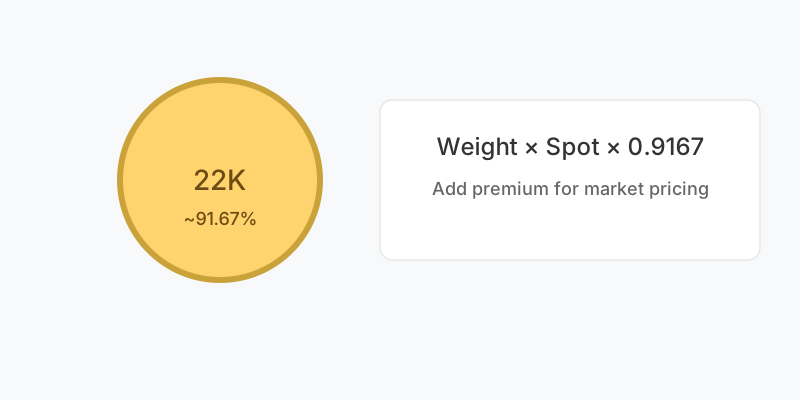
Krugerrand is 22K (~91.67%) gold. Enter weight and select 22K in the calculator to estimate melt value from live spot; add premium to reflect typical market pricing.
Compare buy/sell spreads across dealers, and consider lot size and condition. For fast quotes, start with per‑ounce melt, then adjust by prevailing premiums.
Estimate Krugerrand ValueFutures daily pivot point dashboard
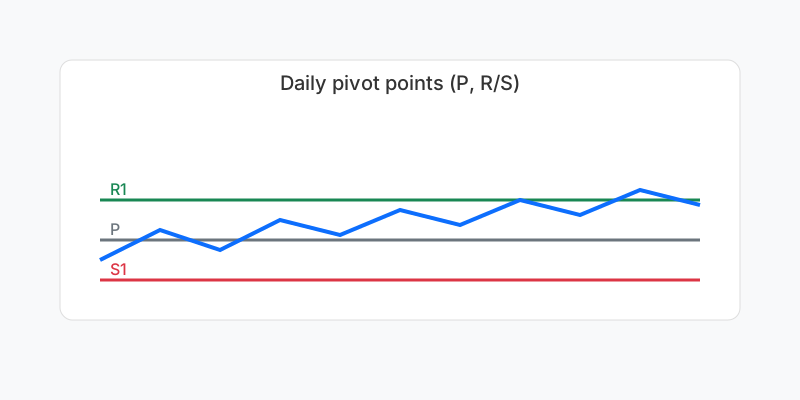
Daily pivots (P, R1/R2, S1/S2) offer intraday levels to plan entries, exits and risk. Combine pivots with RSI/MACD and trend context to avoid chasing volatility.
Use the market page for price context and news flow, then align trades around key levels with tight risk controls. Long‑term investors can ignore intraday noise and focus on macro drivers.
Open Market ChartsKrugerrand vs. 1 oz bar: which to buy?
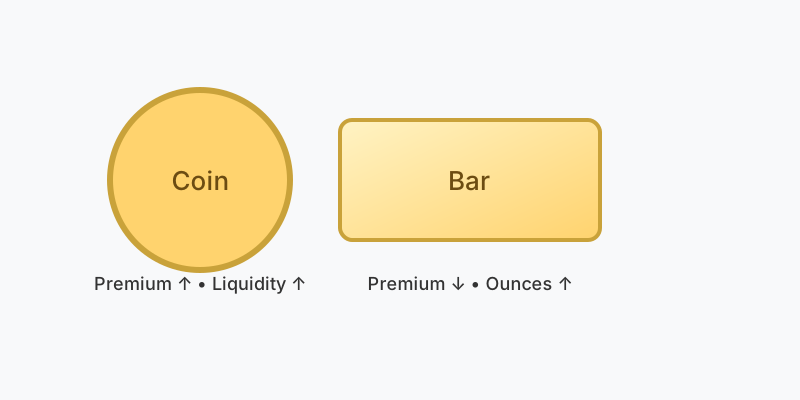
Coins offer strong liquidity and brand recognition with typical premiums over melt; bars often carry lower premiums but may have tighter resale spreads. Your choice depends on budget, exit plan and preferred dealers.
Start with melt math using live spot, then compare premiums and buyback policies. For frequent trading, coins can be simpler; for long‑term stacking, bars may maximize ounces.
Compare with CalculatorHow to read MACD/RSI with pivots
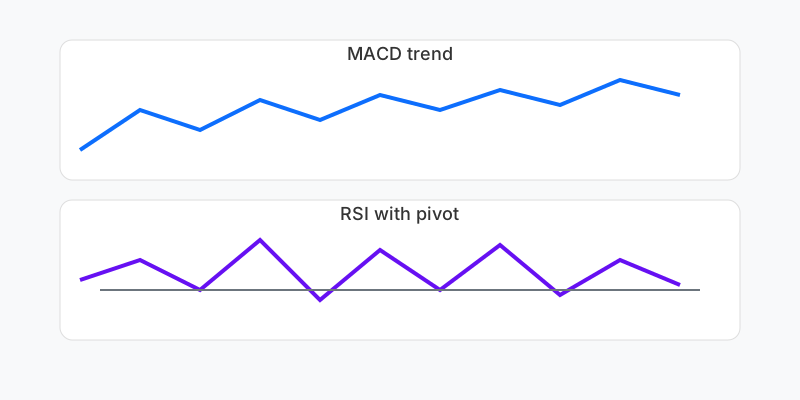
Use RSI to gauge momentum extremes and MACD for trend confirmation. Align entries around daily pivots to avoid chasing moves; watch divergences and moving averages for risk cues.
Combine indicator signals with macro context from the market page. Backtest levels and keep stops disciplined; indicators guide probabilities, not certainties.
Open Market ChartsHow to value scrap 18K chains quickly
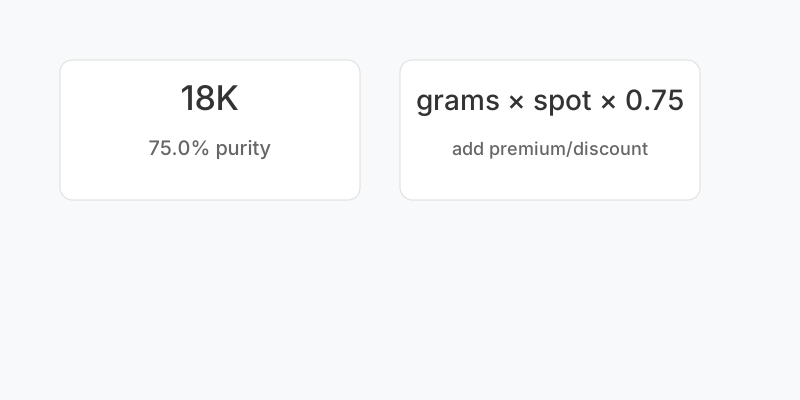
Set units to grams and choose 18K (75.0%) to estimate melt per gram. Multiply total grams by 0.75 to get fine content, then apply live spot price.
For selling, buyers may deduct refining fees or spreads. Enter a negative premium (e.g., -10% to -15%) to approximate local quotes and compare fairly.
Fast 18K EstimateDollar strength and real yields: why gold moves
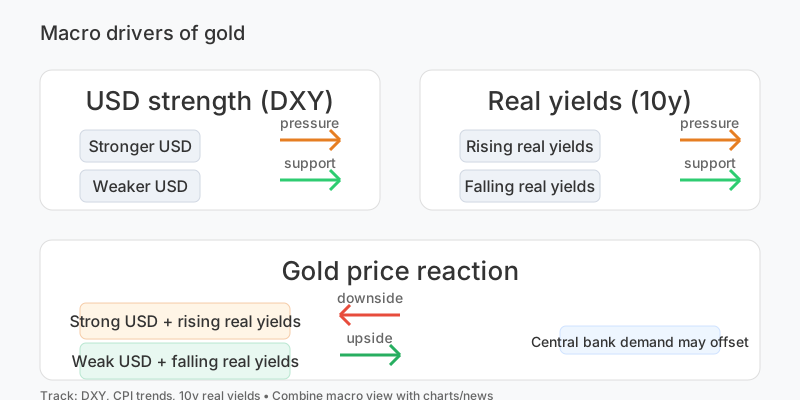
A stronger dollar and higher real yields often pressure gold; easing yields and weaker USD tend to support rallies. Central bank demand can offset cycles.
Track DXY, CPI trends and 10‑year real yields to frame expectations. Combine macro view with market charts and news for better timing.
View Macro Context